

The construction trick that makes a plain tee look like a whole outfit
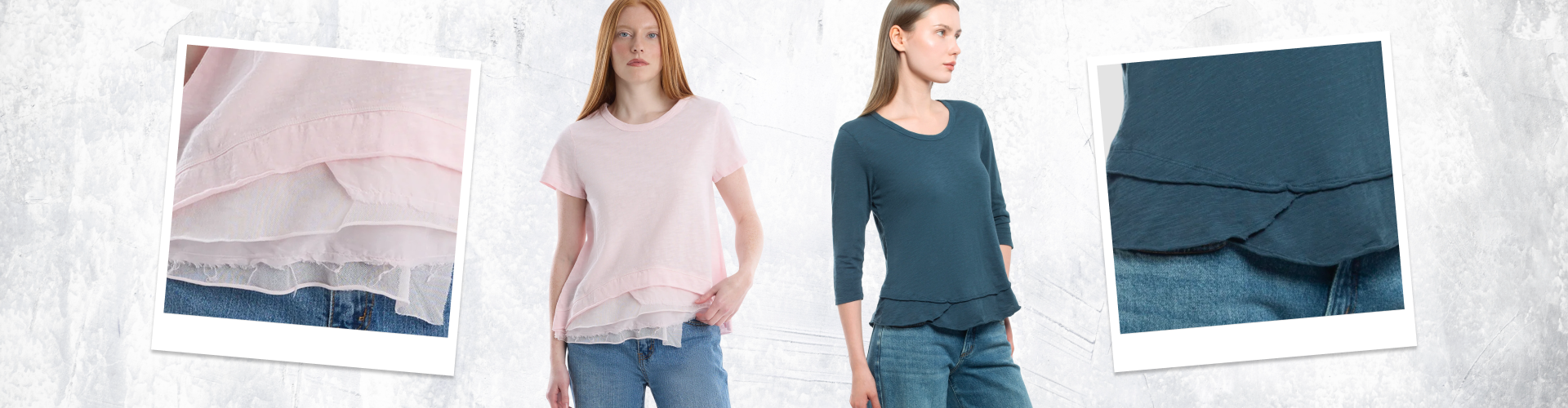
At Wilt, our tees are designed with construction details, like mock layer hems, tiered hems, and mixed-fabric finishes that create the look of layering without requiring a second garment. This post explains how each technique works and why we think construction is a better solution than styling.
We designed the layered look so you don't have to
Layering is having a moment in fashion right now. Every brand has its own take — the unbuttoned shirt over the tank, the cardigan over the slip dress, the jacket over everything. It’s being styled, photographed, and written about as if it requires a second garment and a considered hand.
At Wilt, we’ve been solving the same problem in different ways for years. The layer is already there. It’s in the construction.
What built-in layering means
Built-in layering refers to construction techniques that create the visual effect of multiple garments without requiring them. The result is dimension, movement, and a sense of intention — without the bulk, the adjusting, or the decisions that come with wearing two pieces at once.
It’s a design philosophy rather than a trend response. The techniques we use have been part of the Wilt collection for years because they solve a real problem: how to make a simple tee look considered without making it complicated.
The mock layer hem
The Short Sleeve Mock Layer Tee creates the visual effect of a second tee worn underneath — a longer, slightly softer hem visible below the main body of the garment. There’s no second garment. No tucking, no adjusting, no bulk. It reads as layered from across a room. Up close, it’s one piece of fabric doing two jobs.
The Long Sleeve Mock Layer carries the same principle across seasons. The hem detail that works in July works equally well in October under a jacket, because the construction doesn’t change — only the context does. This is one of the reasons the Mock Layer is among our most returned-to styles. It earns its place in a wardrobe and stays there regardless of the season.
The 3/4 Sleeve Mock Layer brings the same construction into a different sleeve length — and that shift changes how the piece works. The shrunken crew neckline keeps it close at the collar while the 3/4 sleeve hits at a point that works in warm weather and transitions naturally into fall without requiring a layer over it. The mock layer hem is the same detail as the short and long sleeve versions, but the mid-length sleeve gives it a slightly more considered feel — less weekend, more anywhere. Three sleeve lengths, one construction principle, three different places in a wardrobe.
The double-tier hem
The Short Sleeve Double-Tier Mock Hem Crew takes the mock layer principle further. Two tiers at the hem rather than one — each creating a separate visual break, each moving independently. The effect is more dimensional than that of a single mock layer. It catches light at two points, gives a short-sleeve crew tee a quiet architecture that a plain hem doesn’t have, and creates movement with every step.
It’s still one piece. It still requires nothing from the person wearing it. The complexity is in the construction, not the wearing.
The mixed fabric hem
The Boxy Long Sleeve Slub Crew with Mixed Fabric Hem is the most direct expression of this approach. The body is 100% cotton slub — soft, relaxed, boxy. The hem is a silk-woven ruffle. Two fabrics, one garment. The contrast is intentional: cotton slub reads casual, silk reads dressed, and together they occupy a register that neither material reaches alone.
This piece works because the contrast is resolved at the design stage. It doesn’t look like two things trying to coexist. It looks like one considered decision — because that’s what it is.
Why construction outperforms styling
Styling-based layering requires decisions every morning: what goes over what, whether the proportions work, and whether the underlayer is showing the right amount. Those decisions add up. They’re also the first to go when the morning is busy, the day is hot, or the destination is unclear.
Construction-based layering removes the decision entirely. The piece looks considered because it was considered at the design stage, before it reached your wardrobe. The dimension is there whether you think about it or not.
This is the principle behind every mock layer, every tiered hem, and every fabric contrast in the Wilt collection. Not a styling suggestion. A problem solved before it became one.
How these pieces work across seasons
One practical advantage of construction-based layering is that it doesn’t depend on temperature. A mock layer hem reads the same way in summer as it does under a coat in fall. A mixed fabric hem works in July and again in November. The pieces don’t belong to a season — they belong to a wardrobe.
This is part of why we design this way. A piece that works for nine months is more useful than one that works for three. And a detail built into the construction is more reliable than one that depends on how you style it on a given morning.

